
GYPWALL QUIET SF
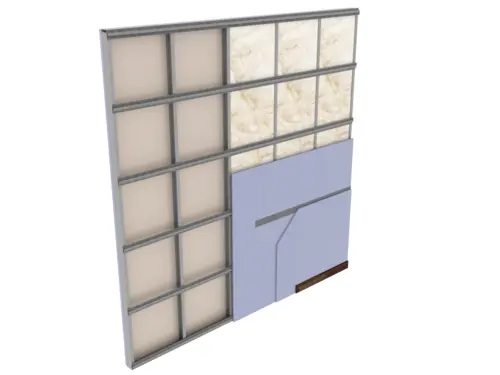
GypWall QUIET SF offers high levels of acoustic performance within a narrow footprint. This makes it the ideal solution for a wide range of buildings where it is important to provide occupants with a comfortable acoustic environment, whilst at the same time maximising available floor area, for examp
GypWall QUIET SF offers high levels of acoustic performance within a narrow footprint. This makes it the ideal solution for a wide range of buildings where it is important to provide occupants with a comfortable acoustic environment, whilst at the same time maximising available floor area, for example, residential, schools and hospitals.
Key facts
- Very efficient use of floor space due to a high level of acoustic performance being achieved with a minimal partition width
-
Uses a unique and innovative performance plasterboard designed specifically for high levels of sound insulation - Gyproc SoundBloc
-
Reduced sound transmission is achieved through the use of Gypframe RB1 Resilient Bar to provide a high degree of isolation between the Gypframe ‘C’ Studs and the high performance Gyproc plasterboard lining
-
Achieves Severe Duty rating in accordance with BS 5234
Application
A wide range of applications, primarily used in flats and apartments such as residential, schools and hospitals.
Sector
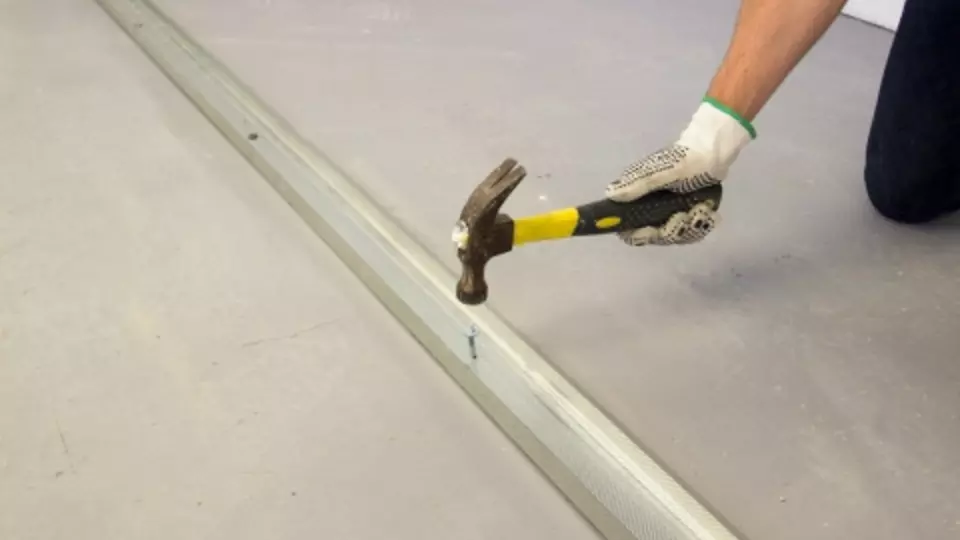
Gypframe Floor & Ceiling channels are fixed to the concrete substrate using Gyproc Wedge Anchors (for fire rated systems) or Gyproc Hammer Fix (for non-fire rated systems). Where Gypframe RB1 Resilient Bars are used to one side only, consider the Gypframe RB1 Resilient Bar dimension of 16mm when setting out.
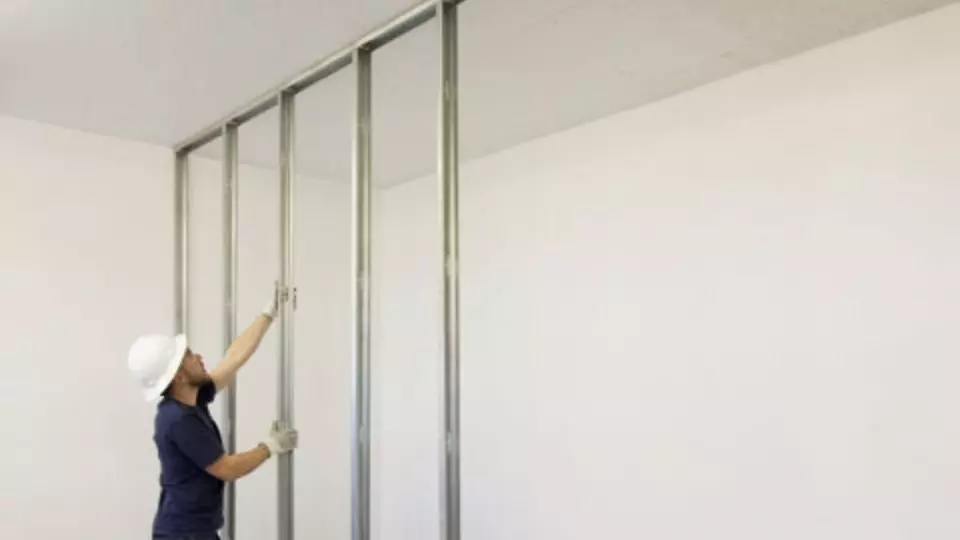
Gypframe ‘C’ Studs are suitably fixed to abutments and are fitted vertically to a friction fit within the channel sections to form the framework. Studs are fitted to all face the same way.
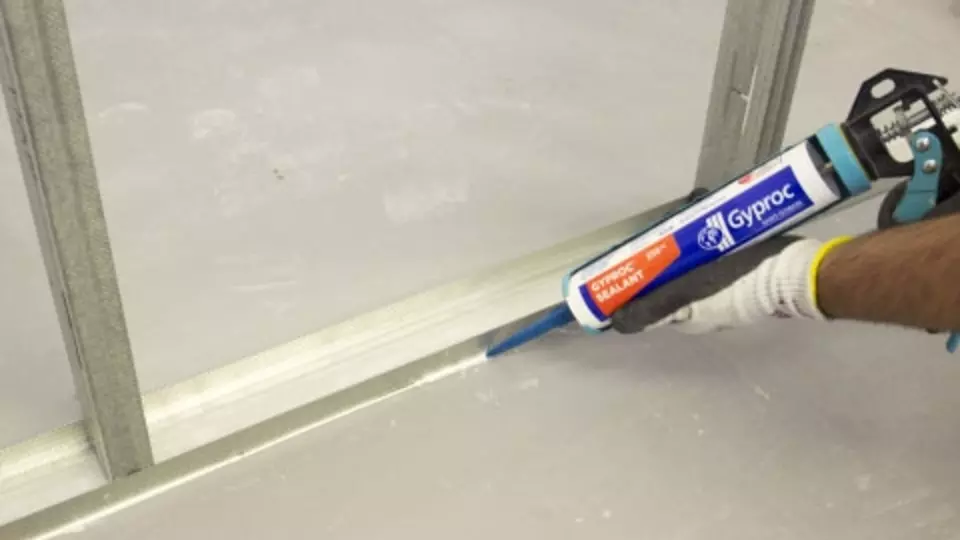
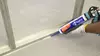
The perimeter of the metal framework is then sealed with Gyproc Sealant for optimum sound insulation performance.
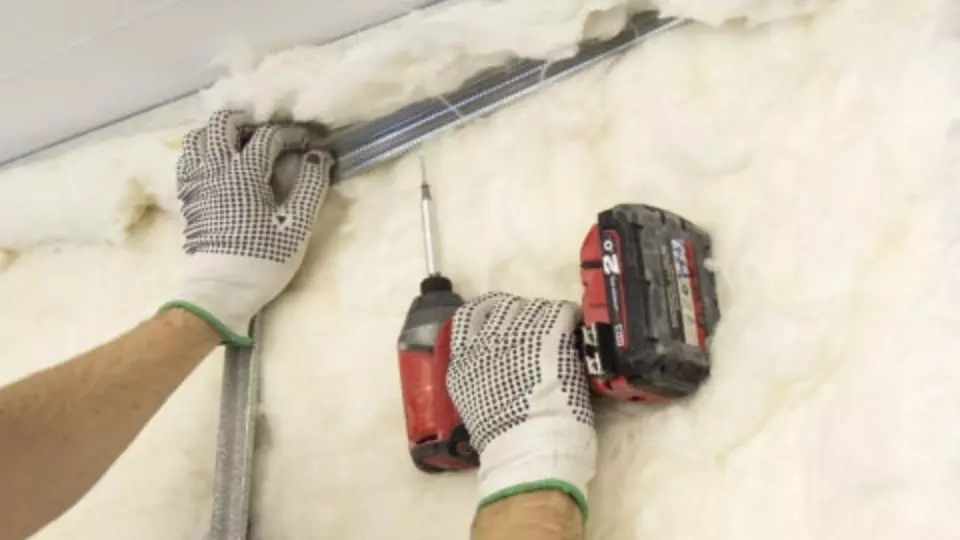
ISOVER Eco APR is added to the partition cavity.
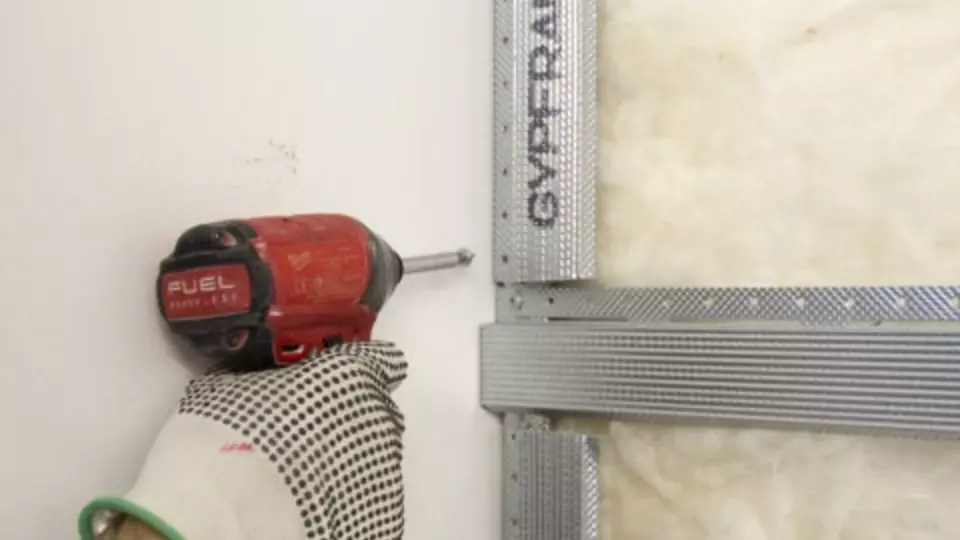
Gypframe RB1 Resilient Bars are installed vertically to abutment and door studs to accept perimeter fixings for the Gyproc plasterboard linings.
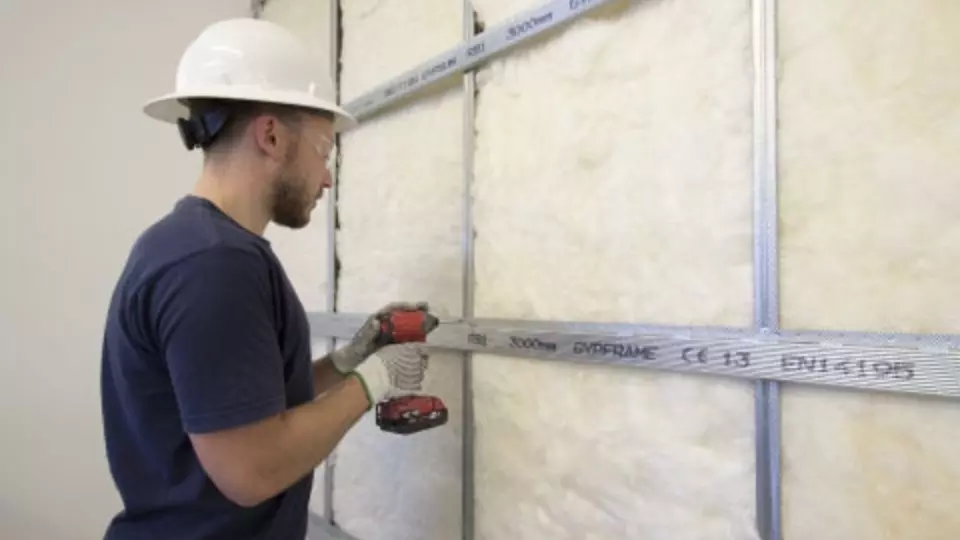
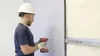
Gypframe RB1 Resilient Bars are fixed across the stud framing and are joined by nesting them together and fixing to Gypframe ‘C’ Studs using Gyproc Waferhead Screws. Gypframe RB1 Resilient Bars are fixed through the angled flange with the resilient section hanging downward, with the exception of the uppermost and bottommost bar, which are fixed with the resilient section pointing upwards to provide board fixing at the head and additional robustness at the base.
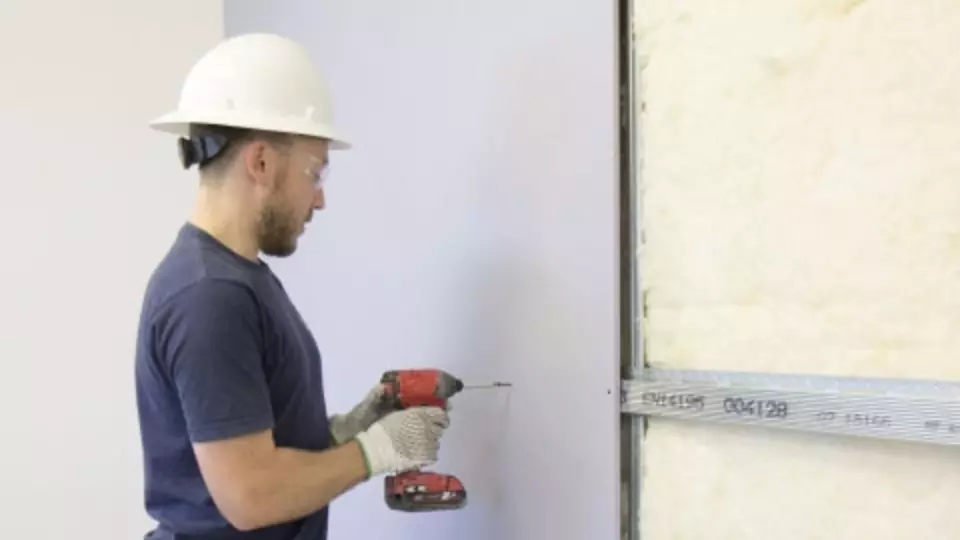
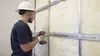
First layer of Gyproc plasterboard is fixed using Gyproc Drywall Screws to Gypframe RB1 Resilient Bars or Gypframe studs.
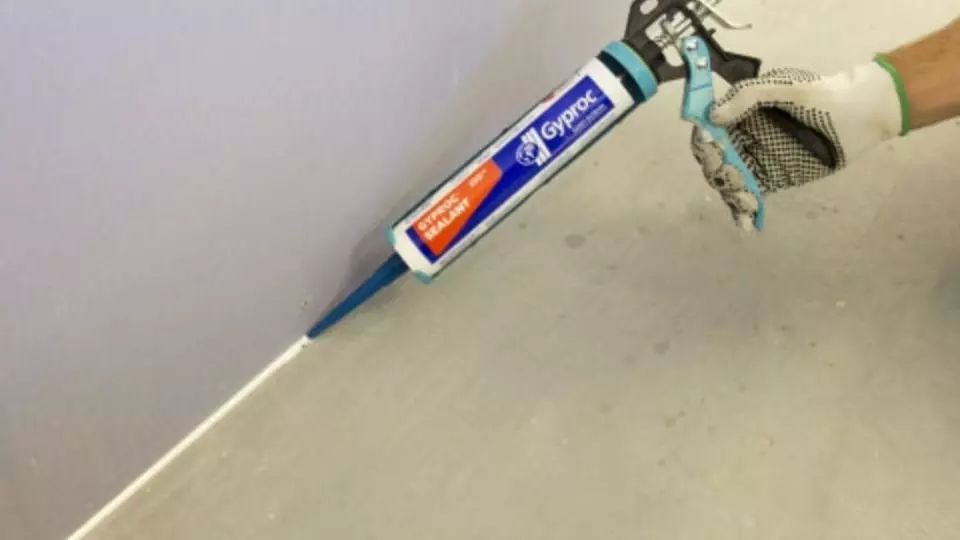
Gyproc Sealant should be applied to the perimeter of the inner layer immediately prior to fitting the face layer board on the side(s) of the partition where resilient bars are located.
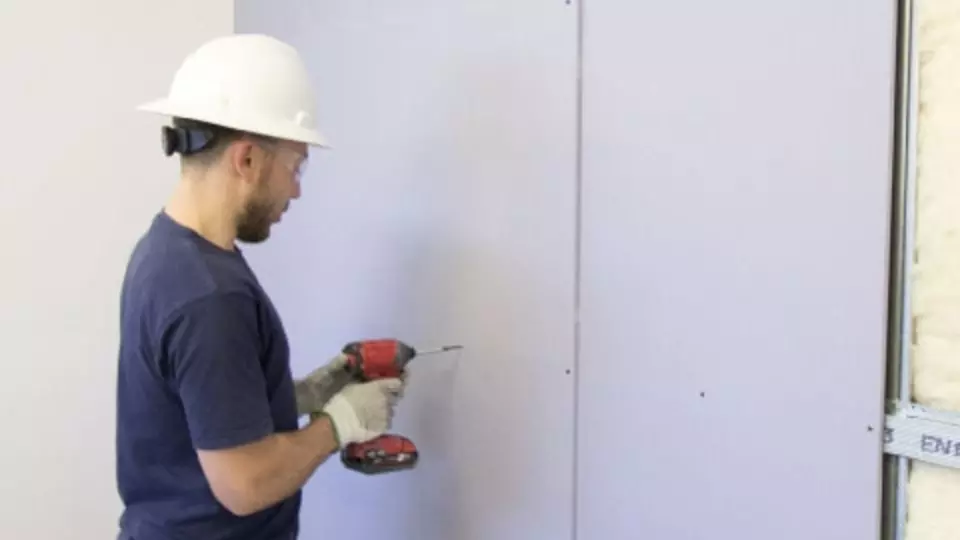
The second layer of Gyproc plasterboard is fixed using Gyproc Drywall Screws to Gypframe RB1 Resilient Bars or studs with all board joints staggered.

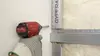
Gypframe Floor & Ceiling channels are fixed to the concrete substrate using Gyproc Wedge Anchors (for fire rated systems) or Gyproc Hammer Fix (for non-fire rated systems). Where Gypframe RB1 Resilient Bars are used to one side only, consider the Gypframe RB1 Resilient Bar dimension of 16mm when setting out.
Gypframe ‘C’ Studs are suitably fixed to abutments and are fitted vertically to a friction fit within the channel sections to form the framework. Studs are fitted to all face the same way.
The perimeter of the metal framework is then sealed with Gyproc Sealant for optimum sound insulation performance.
ISOVER Eco APR is added to the partition cavity.
Gypframe RB1 Resilient Bars are installed vertically to abutment and door studs to accept perimeter fixings for the Gyproc plasterboard linings.
Gypframe RB1 Resilient Bars are fixed across the stud framing and are joined by nesting them together and fixing to Gypframe ‘C’ Studs using Gyproc Waferhead Screws. Gypframe RB1 Resilient Bars are fixed through the angled flange with the resilient section hanging downward, with the exception of the uppermost and bottommost bar, which are fixed with the resilient section pointing upwards to provide board fixing at the head and additional robustness at the base.
First layer of Gyproc plasterboard is fixed using Gyproc Drywall Screws to Gypframe RB1 Resilient Bars or Gypframe studs.
Gyproc Sealant should be applied to the perimeter of the inner layer immediately prior to fitting the face layer board on the side(s) of the partition where resilient bars are located.
The second layer of Gyproc plasterboard is fixed using Gyproc Drywall Screws to Gypframe RB1 Resilient Bars or studs with all board joints staggered.