Why is Glass Considered Green?
In today's age and times, glass is proving to be the go-to green material for buildings looking to be energy-efficient. Not only is it aesthetically appealing, but also functionally superior with a host of advantages to offer. With buildings contributing to nearly 40% of the total Greenhouse Gas emissions, it becomes more imperative to endorse eco-friendly materials. With its ability to be reused, recycled and renewed, glass is ideally suited to green architecture.
Benefits of Glass
RECYCLABLE
Any material that claims to be green should be able to be recycled. Glass is a recyclable building material and helps preserve the ecosystem even while ensuring greater savings.
BRIGHT
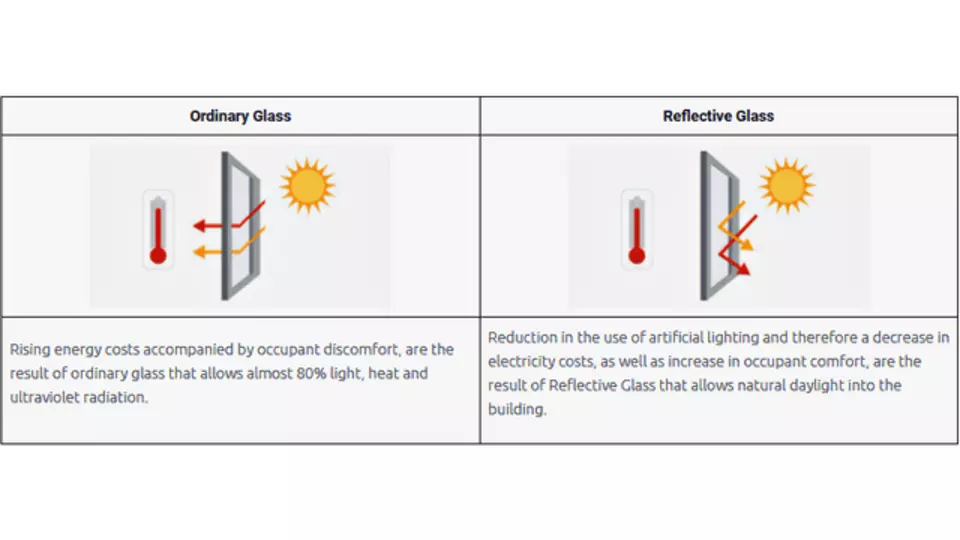
Glass lets in plenty of natural daylight, that keeps the indoors well-lit and also negates the need for artificial lighting during the day.
ACOUSTIC
Double-glazed glass facades have excellent noise insulation properties that seal out external sound distractions and create a more pleasant and productive environment.
RESOURCE-EFFICIENT 
Glass contributes greatly to water conservation as even its manufacturing process needs a very nominal amount of water.
ENERGY-EFFICIENT 
Savings on electricity bills are a natural corollary, with glass capable of reducing nearly 35% of energy consumption of a building.
TRANSPARENT
With its attribute of transparency, glass helps in creating a productive as well as healthy environment.
PROFITABLE
Over a long term, glass gives a healthy return on investment, with savings in terms of energy, natural and human resources.
Reflective Glass Vs Ordinary Glass